

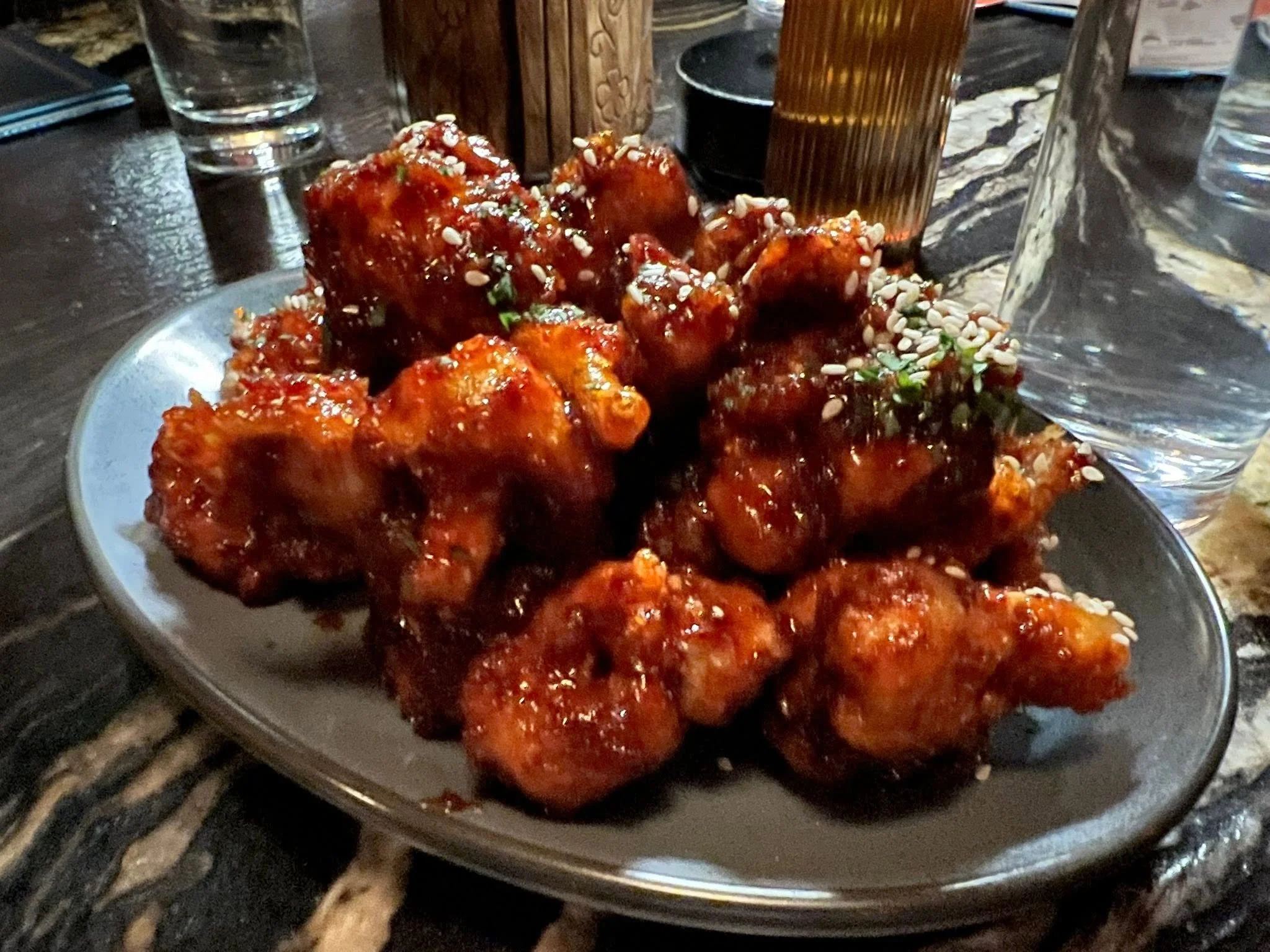
Korean tempura cauliflower wings from a speakeasy-style Tiki bar in Bentonville, AR called Callisto. They also make their own zero-proof rum for mocktails! I have no beef with Callisto but their vegan option is, unfortunately, cauliflower.
I embarked on being fully vegan in 2020 (after years of what I would describe as dancing around this conversion while increasingly favoring plant-based foods) after witnessing the horrible conditions migrant workers locally faced in meat processing facilities. My veganism, just like my feminism, is intersectional. Rather than bore you with the details of that the summary: I am motivated to end cruelty to both animals and people and seeking to help one should not exclude the other.
While I am relatively new to veganism in the grand scheme of things, my interest in culinary arts and food in general is anything but recent. I’ve wanted to open a little cafe for well over a decade and over time that took the form of a vegan cafe where the majority of sauces, cheeses, proteins, etc. are made in house. I’m still figuring out what the identity of that project ultimately is but one thing is for certain: cauliflower will not serve as a primary component in any dish.
In the 6 years I’ve actively been vegan, and the many years prior where I was a frustrated flexitarian, cauliflower is the ever-present Scooby Doo villain of restaurants across the United States. If the chef doesn’t give a single fuck about vegan patrons but broadly accepts they should have an option that serves all the annoying dietary requirements on the market, you’re likely to find that their sole vegan/gluten free/dairy free option heavily relies on this bland and nutritionally mid vegetable. Cauliflower doesn’t really taste like anything and it is cheap. Rather than thinking about how to functionally incorporate a vegan option into the menu, so many restaurants throw cauliflower into a sauce or roast it and call it a day.
This series, The Vegan Option is Cauliflower, is my way of communicating to the food world at large that dumping all your dietary restrictive asks into one entree is a miserable time for your diners. My complaints are for chefs and restauranteurs who think one accommodating option will adequately serve the broad swath of diners who might look for a meal without certain ingredients. All this one option for everyone business does is give vegans without broader dietary concerns a mediocre experience vs their friends who have 10-20 options. It starts to feel hostile after a while!
Vegan cuisine shouldn’t be an afterthought and options on menus shouldn’t feel like a burden to the kitchen. Not cooking with animal products is difficult if they’re integral to how you consider a dish but a big part of what made adopting veganism easy for me was a desire to push the limits of what I’ve come to expect from it. Not eating animals should not limit the taste, textures, or combinations but somehow the easy out is always throwing seasoning on an ingredient that doesn’t impart a lot on its own. If you’re going to laze out on this, might as well dredge and fry some tofu and actually provide some degree of protein to the meal but somehow cauliflower won out for this instead.
Each entry in this series I’ll use the following criteria to ascertain if the vegan option is a cop-out or genuinely well considered:
How many vegan items exist on the menu: If a restaurant has at least 3 vegan options it shows that they’ve thought about serving a diverse customer base. Ideally, and unlikely outside of dedicated vegan joints, a restaurant should have 6 options so 2 appetizers, 2 entrees you don’t have to modify, and 2 desserts. If a place favors having more in one category here over others that’s absolutely fine but to get a perfect rating they would need to present some degree of choice across all three lists because non-vegans will have upwards of 5-10 depending on a restaurant’s scope.
Presentation: I often eat alone so how a dish looks to me will weigh heavily on the score. But there will be times I’m eating with a group and I will see first hand how their dishes look compared to what I receive. This part of the rating is less weighted compared to availability and ingredients but you can tell when your meal is plated with malice.
Nutrition: How well designed is the dish? I am not protein-obsessed when compared to the broader food world but a vegan option should at least be satisfying. No more “I guess I’ll have the salad just remove everything” or “I’ll have the fries.” Cauliflower is catching hands in this project because every single dish I’ve encountered that prioritizes its use is woefully lacking in protein overall. The assumption that people who don’t eat animal products subsist on greens and air continues despite advancements in how we understand nutrition. A solid vegan option does not have to have a vegan meat substitute to count as nutritious, it just has to actually be a well-considered and constructed meal.
Price: Are you trying to charge me $30 for a “cauliflower steak?” If so, you’re not going to like what I have to say. Vegan options are frequently more expensive than the rest of the menu, either through having to “add on” the things you can eat or being charged for all the items you’re removing and what you’re adding to make a meal actually substantial. Taco Bell is a big culprit in this, by the way. Ordering a veggie power bowl is a quick way to get by while traveling but the $7 option quickly turns into $10-12 because anything you add to it is not offset by anything you remove.
Taste: If a cauliflower-centered dish tastes good I’m not going to lie about it. A Tiki bar a dear friend took me to had mocktails and exactly 1 vegan snack option, fried cauliflower in a homemade Korean-inspired sauce. It’s very good! It’s also a bar, I’m not expecting to have dinner there. I still would like them to have more than that but I’d still rank that experience pretty high overall despite the inclusion of my most-maligned vegetable.
The Vegan Option is Cauliflower: If the only option is cauliflower, your establishment is at a disadvantage. Your cauliflower better be the most otherworldly cauliflower experience of all time. Or else.
My goal isn’t to mock restaurants for trying to be inclusive. Vegan cuisine should meet the same criteria we hold all other dishes to and we should expect it to test us in return as chefs explore the possibilities. What we’ve seen most, outside of notable fine dining spaces, is simply fulfilling a brief without much interest in making the product excel. In the US right now I fully understand why restaurants are narrowing their menus and foregoing vegan options all together. It is hard out here both from a sourcing and cost of business perspective! So this project isn’t designed to be cruel but to offer much needed feedback on an entire branch of food that should be as celebrated as BBQ and sushi but the perspective on it in many cases is one of limitations rather than exploration.
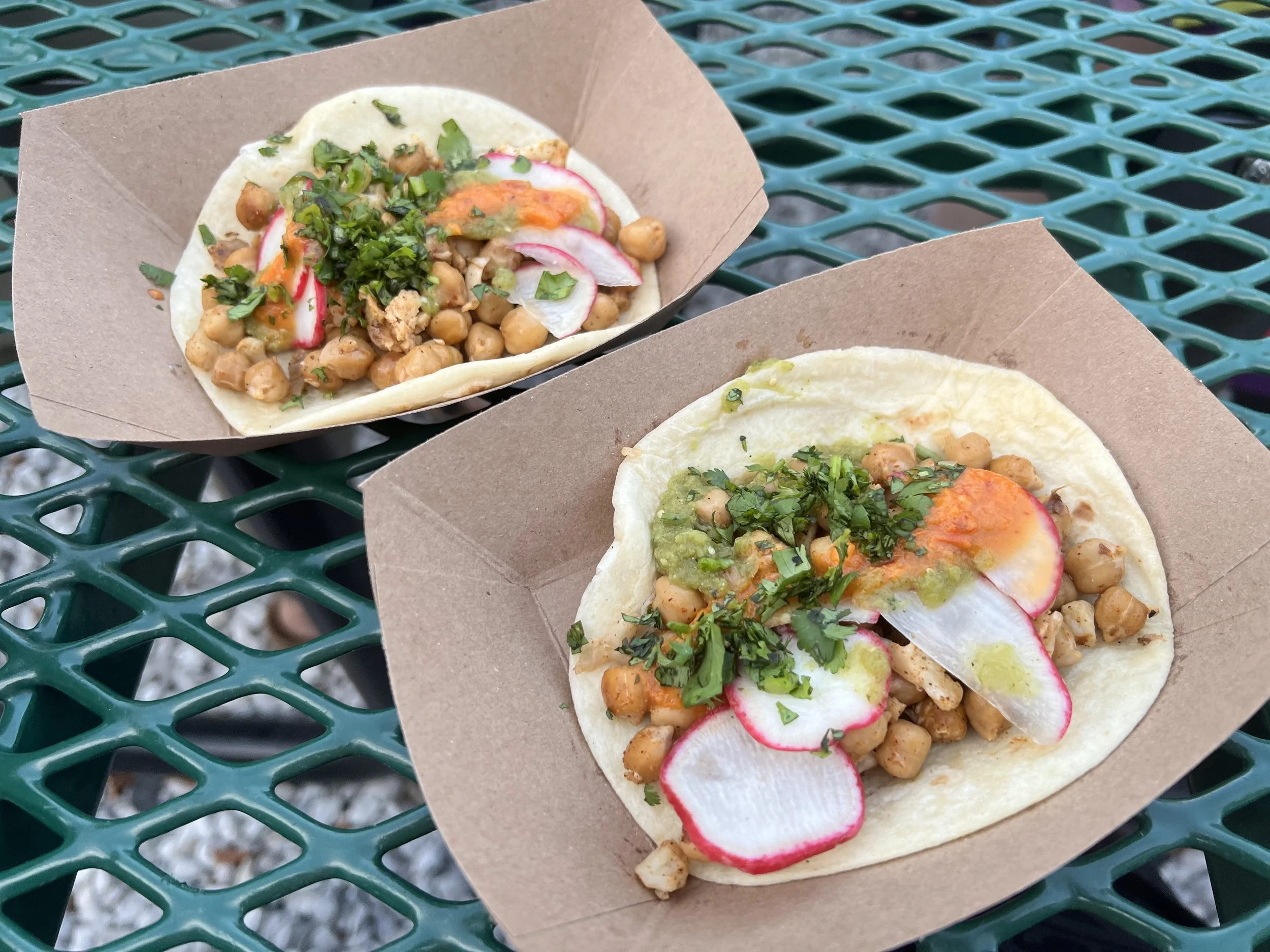
These were ultimately fine and the addition of chickpeas does help but the vegan option at City Park in Fayetteville, AR is, unfortunately, cauliflower. (Minus points for them having a veggie burger that is bound with egg.)
Some of the oldest food-ways in the world are plant-based. Our obsession with centering meat and animal products in every meal is very much a modern invention in the scope of human food history. Easy access to meat in particular is a byproduct of industrialization and technological advancement that increasingly takes a toll on the entire food chain and access to diverse options. You may not agree with me that an abolishment of industrial farming practices is necessary but you might be more convinced that food diversity is beneficial to us (let alone the planet) and we should strive to be adventurous and harmonious eaters. Vegan options at restaurants should be as undeniable as their animal-filled counterparts and should fit the overall vibe of the menu they’re included on. Holding vegan options to a higher standard is necessary, now more than ever as some of the most comically evil bad actors are attempting to prop up meat production business at a time our planet is in open rebellion against our worst excesses.
For the record, I don’t actually hate cauliflower but I am tired of my only choice while attempting to exist in society being some new half-assed rendition of a cauliflower wing or cauliflower taco.